“Lee's army, thinned by desertion and casualties, was now much smaller than Grant's. One last Confederate attempt to break the Union hold on Petersburg failed at the decisive Battle of Five Forks (sometimes called "the Waterloo of the Confederacy") on April 1. This meant that the Union now controlled the entire perimeter surrounding Richmond-Petersburg, completely cutting it off from the Confederacy. Realizing that the capital was now lost, Lee's army and the Confederate government were forced to evacuate. The Confederate capital fell on April 2–3, to the Union XXV Corps, composed of black troops. The remaining Confederate units fled west after a defeat at Sayler's Creek on April 6.[278]”
“It's right next to Taco Bell. Freshly made corn tortillas everyday. This place NEVER disappoints. NEVER. It don't look much, but you'll be satisfied.”
“Best fried chicken ever, went there for the first time in a while and I swear it gets better each and every time I go. I don't see why people hate on this small deli, literally taste so much better than any other deli I been too!! Way better than a Walmart deli or heb deli. There fried chicken is the most delicious part along side their lovely Mac and cheese with mash potato's”
“The naval portion of the war ended more slowly. It had begun on April 11, 1865, two days after Lee's surrender, when President Lincoln proclaimed that foreign nations had no further "claim or pretense" to deny equality of maritime rights and hospitalities to U.S. warships and, in effect, that rights extended to Confederate ships to use neutral ports as safe havens from U.S. warships should end.[298][299] Having no response to Lincoln's proclamation, President Andrew Johnson issued a similar proclamation dated May 10, 1865, more directly stating the premise that the war was almost at an end ("armed resistance...may be regarded as virtually at an end") and that insurgent cruisers still at sea and prepared to attack U.S. ships should not have rights to do so through use of safe foreign ports or waters and warned nations which continued to do so that their government vessels would be denied access to U.S. ports. He also "enjoined" U.S. officers to arrest the cruisers and their crews so "that they may be prevented from committing further depredations on commerce and that the persons on board of them may no longer enjoy impunity for their crimes".[300] Britain finally responded on June 6, 1865, by transmitting a June 2, 1865 letter from Foreign Secretary John Russell, 1st Earl Russell to the Lords of the Admiralty withdrawing rights to Confederate warships to enter British ports and waters but with exceptions for a limited time to allow a captain to enter a port to "divest his vessel of her warlike character" and for U.S. ships to be detained in British ports or waters to allow Confederate cruisers twenty-four hours to leave first.[301] U.S. Secretary of State Seward welcomed the withdrawal of concessions to the Confederates but objected to the exceptions.[302] Finally, on October 18, 1865, Russell advised the Admiralty that the time specified in his June 2, 1865 message had elapsed and "all measures of a restrictive nature on vessels of war of the United States in British ports, harbors, and waters, are now to be considered as at an end".[303] Nonetheless, the final Confederate surrender was in Liverpool, England where James Iredell Waddell, the captain of CSS Shenandoah, surrendered the cruiser to British authorities on November 6, 1865.[304]”
“My all time favorite place to shop for meat for grilling out. Best cuts of beef, and friendly ppl too. The ready made food is delicious, produce is fresh”
“Bathrooms are clean, store is clean, they had everything I was looking for! Vanessa was my cashier, she was super helpful and kind. I am glad I was able to stop here while on shift for Uber. Great coffee, amazing sandwich and superb customer service! Thank you!”
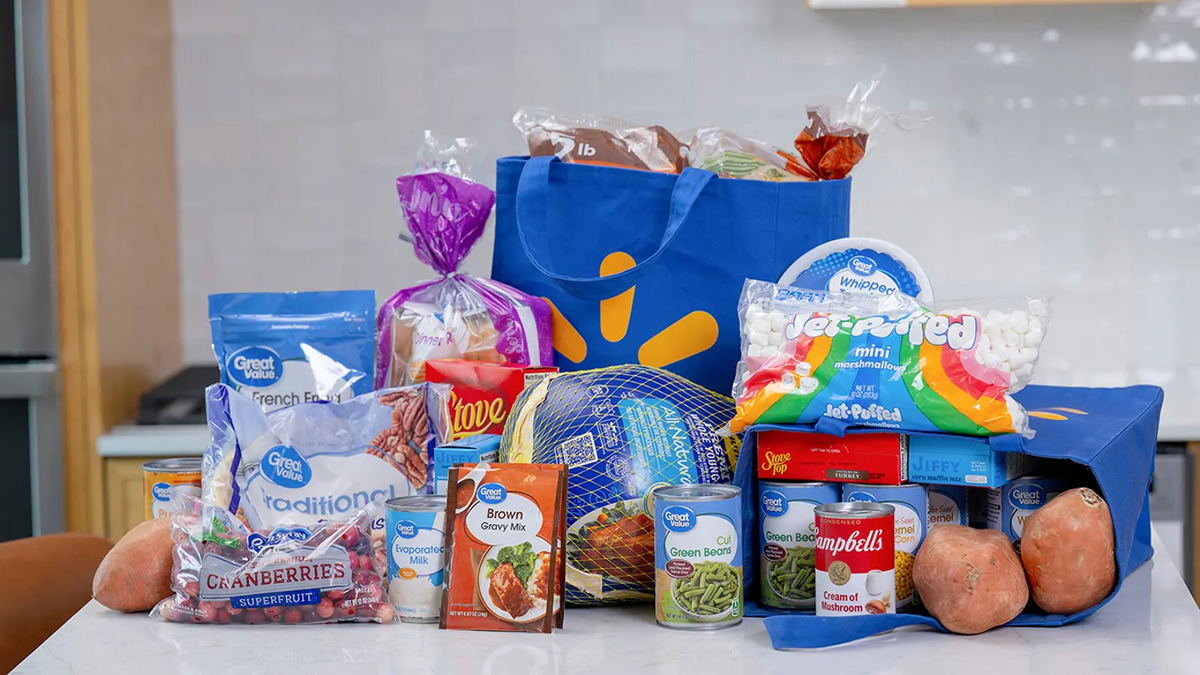
Thanksgiving dinner is getting cheaper this year as major retailers compete to offer families the most affordable holiday feast. Discount grocers and big-box stores are launching deals that feed 10 people for as little as $36. This marks a significant drop from last year's prices as companies respond to ongoing concerns about grocery inflation.
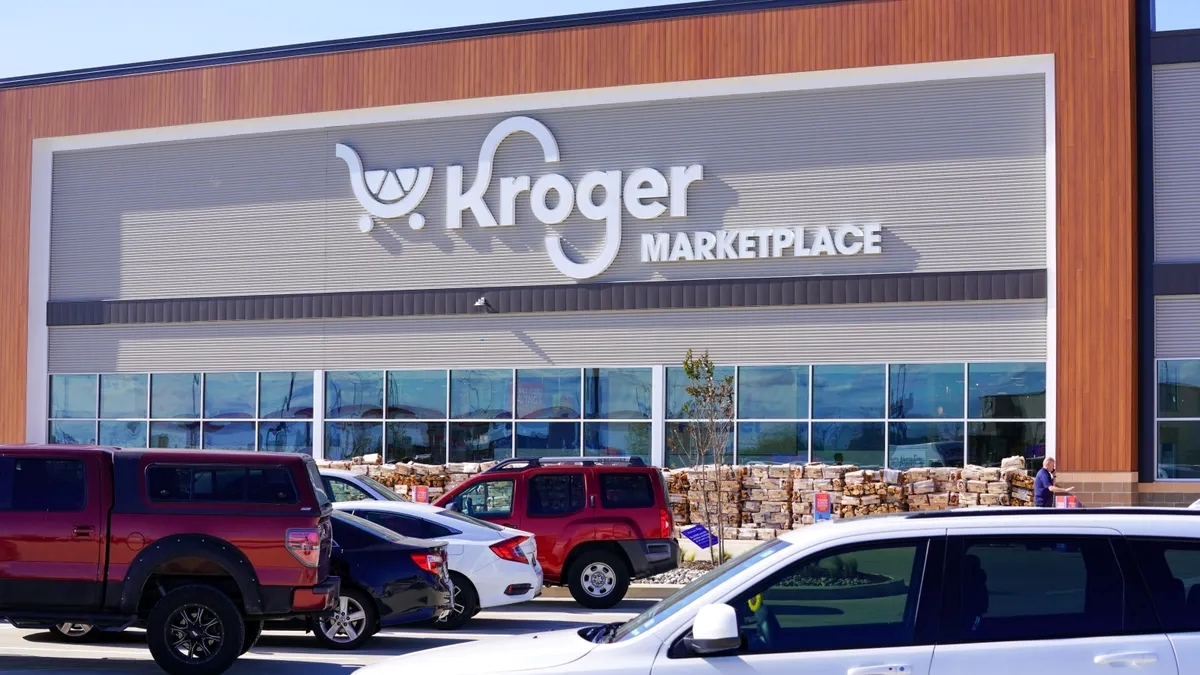
The Cincinnati-based supermarket giant will open about 110 new stores in fast-growing markets by 2029 and introduce three updated store formats, executives told investors Oct. 20 at the company’s Investor Update in New York. Kroger already runs about 2,700 stores in 35 states. The formats come in three sizes, a bit like small, medium and large, matched to each market. Mary Ellen Adcock, Kroger’s executive vice president and chief merchant and marketing officer, walked through the lineup.
Walmart shoppers want a head start on the holidays, and money explains a lot of it. Some 44% of respondents call affording the holidays their top stressor, and 61% say holiday costs shape their shopping mood. Asked what would make the season easier, 70% picked lower prices and 57% picked more deals and promotions. Convenience ranks lower: 30% want one-stop shopping across categories, and 20% want faster delivery.
Walmart wants your groceries at the door before the ice cream softens. On May 29, the retailer said its 30-minute-or-less delivery had reached 33 U.S. markets, adding a wave of new cities across the Northeast. Shoppers in those areas can order from more than 100,000 items, everything from fresh produce and baby formula to pet food, electronics, cold medicine, and prescriptions. Behind the scenes, the service leans on Walmart's store network and an algorithm that factors in order size, available drivers, and distance from the store.
Trader Joe's keeps adding stores, and shoppers keep showing up. The California grocer has marked nine more locations as "opening soon," pushing its expansion into new corners of the country. The grocer also took first place in the American Customer Satisfaction Index's 2026 supermarket rankings. It has held a spot near the top of that list for years.