
{{ group }}
-
{{ item.name }}
{{ item.address }} {{ item.name }}
- {{ item.properties.formatted }}
“Pretty well stocked family dollar for as far as family dollar stores goes I guess. The lady that was working here this evening was really kind so that’s what really make it a five star for me. I mean to be real honest I’m not sure how to rate a family dollar in lake placid vs other dollar stores however the person working here was nice, that gets a 5 star all day for me.”
“I have encountered employees the last 4 months or so with excellent customer service ! Most of my questions about where an item got moved to, involves them going to find product, and I follow them which helps me to remember where it is now... great store, just can't get some items again, which is frustrating because once you find a product you like, it's gone, never to be found !”
“My review is based on the hospitality I've received at this establishment. I broke my phone when in the area for an appointment, and I'm not familiar with Saranac Lake and the manager was kind enough to write down instructions and repeated them several times to a flustered and panicked woman. Thank you!!”
 Dollar Stores
 Dollar Stores
 Dollar Stores
 Dollar Stores
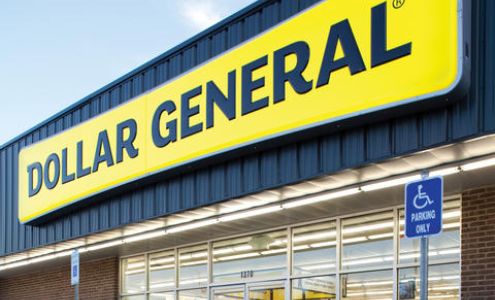
“This is the cleanest and most organized Dollar General in Northern New York. Most would agree that the Bloomingdale store beats Lake Placid, while the Saranac Lake store is the worst I've seen. It's always dirty, crowded, and not accessible for handicapped or disabled customers. This older store was the original location of Saranac Lake's first Kinney Drugs. The only thing that made Kinney Drugs unique was the fact that it was a pharmacy as well as a small grocery store that sold alcohol, cigarettes, and lottery tickets along with all your health needs, as well as frozen processed foods and expensive toilet paper and laundry soap—all while still offering single cans and 40 oz bottles of beer of all kinds. But there was no denying that locals had a favorite: Genesee in the red and white can. And it was employee-owned, not owned by a corporation or a large group of shareholders. It was owned by its employees, and it was the only other pharmacy besides a mom-and-pop shop that everyone grew up getting their prescriptions from—a family that was respected and loved. They ran that pharmacy, knew every customer personally, and were helpful and very invested in the town itself. They treated low-income people no differently from middle-class or business owners; everyone was the same because everyone got sick, some more than others. This was a family-run pharmacy. Entire families had all their prescriptions filled there. I believe that as it passed from one generation to the next, they remained active in the community, raising their children in the same town. They believed in the old ways of helping and caring for each other. It was always nice to be remembered and not have to rehash your entire medical history because this pharmacy kept track of their customers and believed in ways to improve the health of the entire community—not just by giving prescriptions but also by suggesting eating tips, exercise routines, or referring them to doctors so they could get better.
Kinney Drugs, on the other hand, provided prescription drugs to people who were also buying things that contributed to their health issues, making their conditions worse and requiring more prescriptions. Kinney Drugs also greatly profited from the sale of alcohol, cigarettes, tobacco, the lottery, and later on, scratch-off tickets, which not only became an addiction but an obsession. It was a job for some people—they did nothing but scratch off tickets all day. I was once told by a man obsessed with scratch-offs that, to avoid feeling ashamed of his habit of 50 to 60 tickets a day, he would go to Stewart's Gas Station, which was off Broadway and within walking distance of the lower-income district, where old homes rented rooms or entire top floors. These people never seemed to shop at places where they could buy healthy groceries for their families—instead, they wasted their money at Stewart's, where they could get Hot Pockets, Velveeta Shells and Cheese, half-gallon ice cream containers... I didn't mention a single vegetable or healthy dinner option, did I?
The problem was that both places were more expensive than going to the only two grocery stores we had. Residents survive on minimal income, unable to afford middle-class lifestyles, often resorting to shoplifting. Local grocery options are limited to A&P and Grand Union. I think the dollar store movement was so necessary in our town because the only other thriving establishments were bars. During the 1980 Winter Olympics, Saranac Lake had more bars per capita than anywhere else in the world. Try processing that, and it becomes easier to understand the town's economic struggles—high poverty, the inability to afford to live and keep your family healthy in the same town.”